Exhibition Introduction
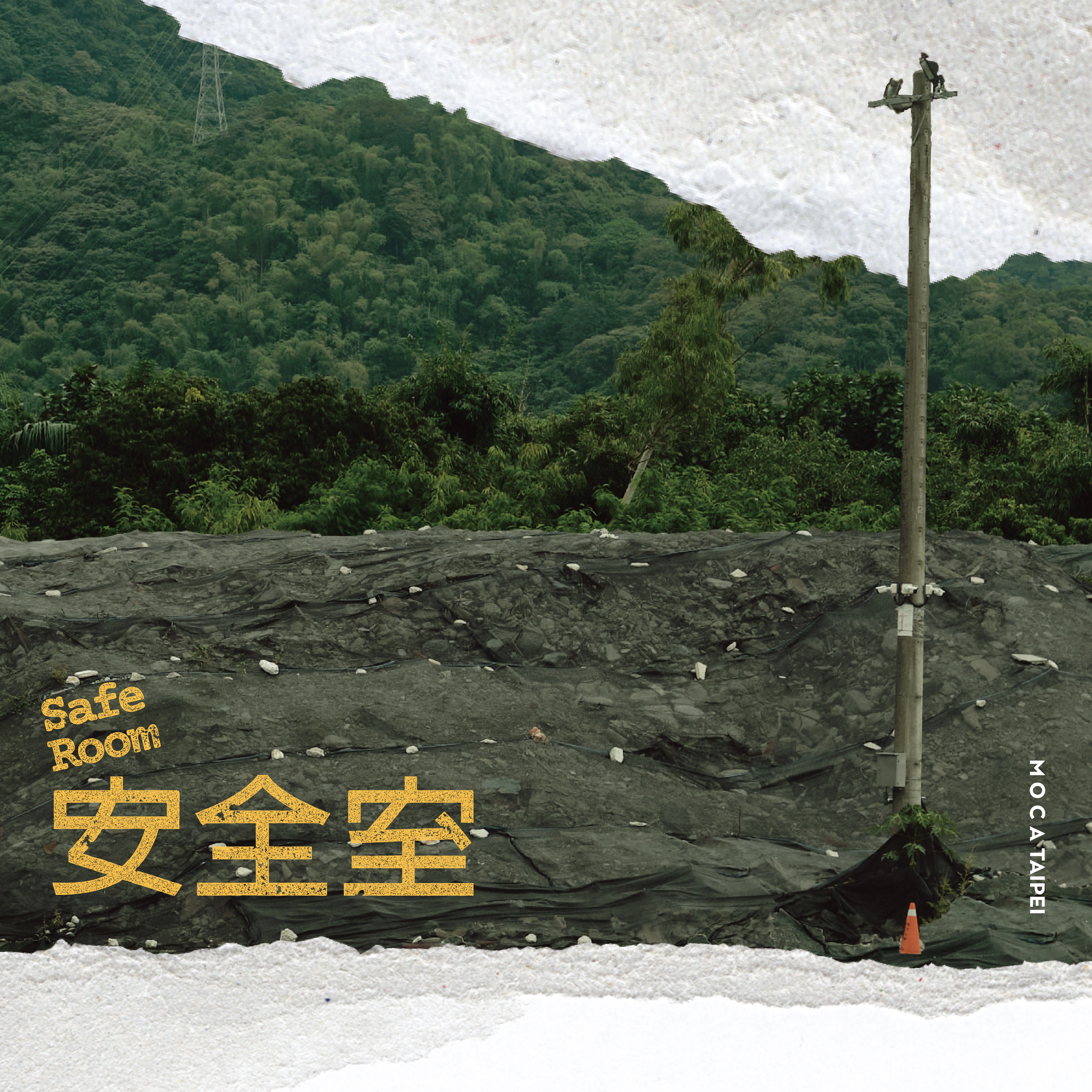
Leaning against the shelter while following the air raid evacuation instructions, one lowers the body and carefully enters this space. In scenes that intertwine disasters, wars, personal crises, and social relations, Safe Room illustrates a complex reality characterized by overlapping layers and tectonic fissures that separate individuals. Following this framework, the exhibition showcases a refuge that temporarily protects against imminent threats within a dynamic landscape that is constantly morphing, obscuring, and shaping itself. By envisioning such an alternate space, the exhibition not only erodes the boundaries of safety and isolation but also broadens our imagination of disasters.
The notion of a safe elsewhere often reflexively implies potential danger. Safe Room starts with the idea of “disaster” and explores what disasters might entail from a Taiwanese viewpoint. From the authoritarian marks imprinted on this land to looming war threats and recurring natural disasters, these factors continuously reshape the trajectory of life as we are familiar with and alter our relationships and interactions with one another. When coping with these man-made, natural, and relational forces, how do we coexist with them? How do we find a safe space for ourselves within them?
Over the past thirty years, Taiwan has faced numerous challenges, including earthquakes, typhoons, and political turmoil. Through a variety of artworks and events, the exhibition aims to address these threats. The curatorial team brings together seven artists from Japan, Switzerland, and Taiwan, each offering insights drawn from their different experiences with disasters, inviting visitors into a sheltering space away from danger yet unsettlingly close to the frontier of these threats. By navigating the increasingly approaching and expanding boundaries, the exhibition examines the concept of post-disaster governance, individual coping mechanisms, and the alternative relationships formed by catastrophes of different natures. Safe Room reveals the subtle distance between us and potential calamities, urging us to consistently position ourselves on a frontier and adjust our defensive strategies and stances. This, perhaps, reflects our approach to governance and living.